
A small blister should not turn into a medical emergency, but for people with diabetes, that can happen faster than most realize. Diabetic foot ulcer prevention matters because nerve damage, poor circulation, and slow healing can make a minor sore easy to miss and hard to heal. The good news is that many foot ulcers can be prevented with steady habits, the right footwear, and prompt medical attention when something changes.
Why diabetic foot ulcer prevention matters so much
A foot ulcer is an open sore that usually develops on the bottom of the foot or around pressure points. In people with diabetes, ulcers often begin with something simple – a tight shoe, dry cracked skin, a callus, or a cut that did not seem serious at first.
The real problem is that diabetes can reduce feeling in the feet. If you cannot feel pressure, rubbing, or pain normally, you may keep walking on an injured area without knowing it. At the same time, circulation may be reduced, which limits how much oxygen and nutrients reach the tissue. Healing slows down. Infection becomes more likely. That is why early prevention is not just helpful. It is one of the most effective ways to protect mobility and avoid more serious complications.
Not every person with diabetes has the same level of risk. Someone with healthy sensation and good circulation may need routine prevention and annual checks. Someone with neuropathy, foot deformities, prior ulcers, or a history of amputation needs closer monitoring and more specialized care. This is one of those situations where it depends on the person, not just the diagnosis.
The daily habits that lower risk
Prevention usually starts at home. The most important step is a daily foot check. Look at the tops, soles, heels, and between the toes. If bending is difficult, use a mirror or ask a family member for help. Watch for redness, swelling, blisters, cracks, drainage, calluses, nail changes, or spots that look darker than usual.
Clean feet gently with lukewarm water and mild soap, then dry carefully, especially between the toes. Moisturizer can help prevent dryness and cracking, but it should go on the tops and bottoms of the feet, not between the toes where extra moisture can encourage skin breakdown or fungal problems.
Toenail care also matters. Nails trimmed too short or with sharp corners can lead to ingrown nails and skin injury. If vision is poor, sensation is reduced, or nails are thick and hard to manage, home trimming may not be the safest option. In those cases, regular podiatric care is often the better choice.
Blood sugar control plays a major role as well. It is not the only factor, but it affects nerve health, circulation, immune response, and wound healing. Good glucose management does not replace foot care, and foot care does not replace glucose management. The two work together.
Footwear is not a small detail
Many ulcers begin with pressure and friction, which makes shoes one of the biggest factors in diabetic foot ulcer prevention. A shoe that feels only slightly snug can create enough rubbing to damage skin over time, especially if sensation is reduced.
Supportive shoes with a roomy toe box, stable soles, and a proper fit are usually best. Shoes should not pinch, slide, or create pressure points. Before putting them on, it helps to check inside for small rocks, rough seams, or objects that could irritate the skin.
Socks matter too. Clean, dry socks that fit well can reduce friction and help manage moisture. Seams, bunching, and overly tight elastic can all become problems. Some patients do well with diabetic socks or custom orthotics, especially if they have high-pressure areas, hammertoes, bunions, or other structural issues.
Walking barefoot is risky, even at home. A tack, a splinter, hot pavement, or a rough patch of flooring can cause an injury that goes unnoticed until it has already worsened. For some people, this advice feels overly cautious. In practice, it is one of the simplest ways to reduce preventable injuries.
Warning signs you should not ignore
A lot of serious diabetic foot problems start quietly. Pain is not always a reliable signal, especially when neuropathy is present. That is why visual changes matter so much.
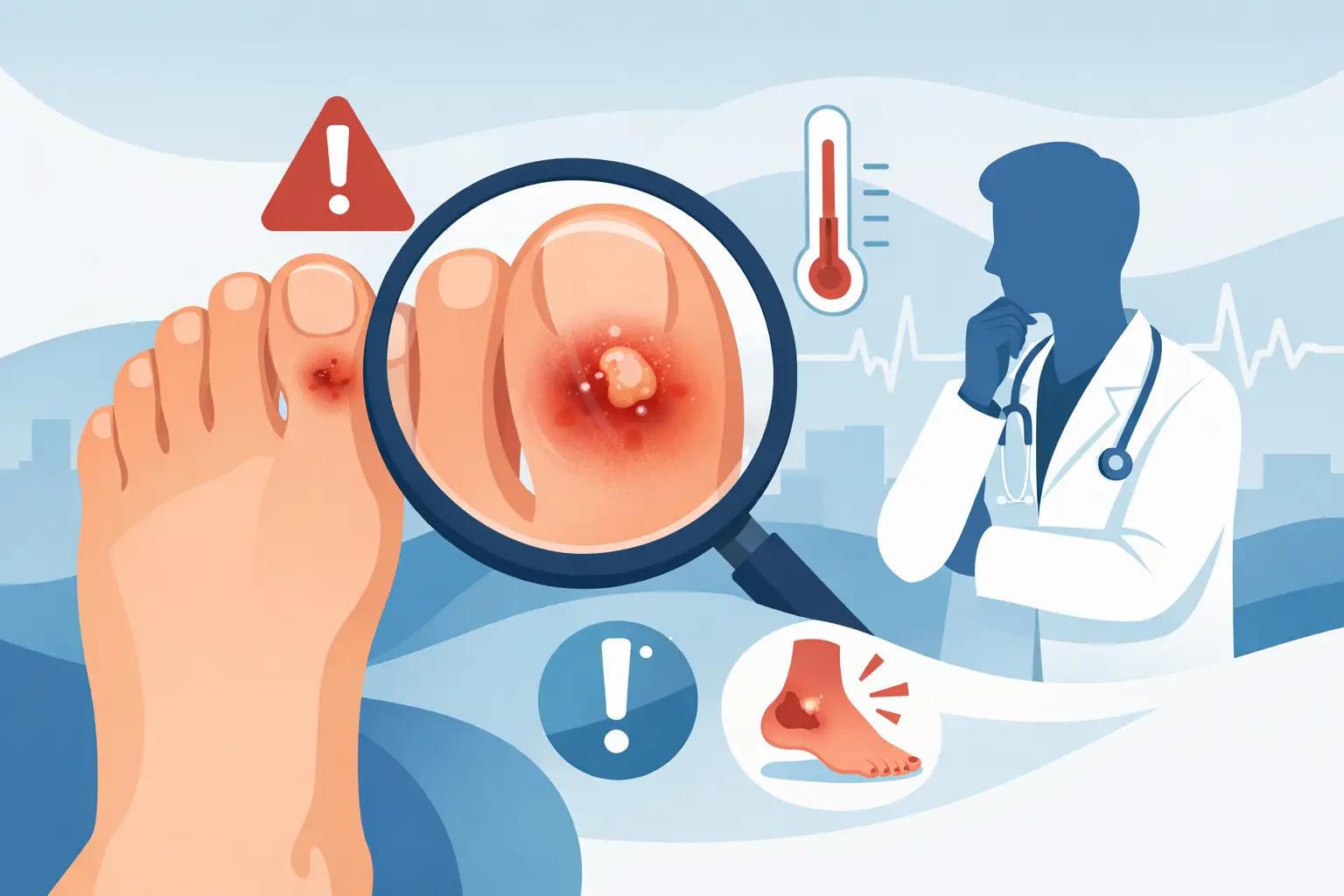
Call a foot specialist or your medical provider if you notice a blister, cut, crack, new redness, warmth, swelling, drainage, foul odor, blackened tissue, or a sore that is not improving. A callus that keeps building in the same spot can also be a warning sign. It may mean that too much pressure is being placed on one area, and ulcers often form beneath thick callused skin.
It is tempting to try over-the-counter corn pads, bathroom surgery, or strong medicated products to remove calluses. For someone with diabetes, those home fixes can backfire. Acid-based products may damage healthy skin. Trimming too deeply can create an opening for infection. When skin is fragile or sensation is reduced, the safer move is professional evaluation.
Medical care that helps prevent ulcers before they start
Routine diabetic foot exams are one of the most useful parts of prevention. During an exam, a podiatrist checks skin integrity, circulation, sensation, pressure points, foot shape, and nail health. This helps identify risk before a wound develops.
That matters because prevention is rarely about one dramatic intervention. More often, it is about catching the small things early. A callus can be safely reduced. A pressure point can be offloaded. A shoe problem can be corrected. A fungal nail issue or ingrown nail can be treated before it causes skin breakdown nearby.
For higher-risk patients, visits may need to be more frequent. If you have neuropathy, circulation concerns, foot deformity, a current wound, or a past ulcer, regular follow-up can make a real difference. Conservative care is often enough when issues are identified early. Waiting too long usually limits options.
At Chambers Foot & Ankle, that preventive approach is a big part of helping patients stay active and avoid more serious complications. The goal is not just to treat wounds when they appear. It is to reduce the chance that they develop in the first place.
When circulation and nerve damage change the plan
Some patients do everything right and still face a higher level of risk because of neuropathy or vascular disease. That does not mean prevention has failed. It means the plan has to be more tailored.
If sensation is reduced, daily visual checks become even more important because pain may not be present. If circulation is poor, even a small wound deserves quicker attention. If foot shape has changed because of bunions, hammertoes, Charcot changes, or previous surgery, pressure relief may need to include custom inserts, specialized shoes, or activity adjustments.
There can be trade-offs here. A more protective shoe may not feel as light or stylish as a casual slip-on. A brace or custom orthotic may take some getting used to. But the right support can reduce pressure where ulcers tend to form, and that trade is often worth it when the alternative is a wound that limits walking for weeks or months.
Prevention works best when it is consistent
Most diabetic foot ulcers do not appear out of nowhere. They usually develop after repeated pressure, unnoticed injury, or delayed care. That is why prevention works best as a routine, not a one-time effort.
Check your feet every day. Wear shoes that truly fit. Keep skin clean and moisturized without trapping moisture between the toes. Stay on top of blood sugar. Do not ignore calluses, nail problems, or changes in skin color. And if something looks off, get it checked sooner rather than later.
Protecting your feet is really about protecting your independence. A few careful habits today can help you keep moving with more confidence tomorrow.