
Yellow, thickened toenails can seem like a small cosmetic issue at first – until they start catching on socks, becoming painful in shoes, or making you avoid sandals altogether. For many patients, laser treatment for toenail fungus is appealing because it offers a modern option when creams have failed or oral medication is not a good fit.
Toenail fungus, also called onychomycosis, is common and often stubborn. It can start as a small white or yellow spot under the nail and gradually spread, leaving the nail brittle, discolored, misshapen, or thick. Because the fungus lives in and under the nail, treatment can take time no matter which method you choose. That is one reason many people feel frustrated before they ever step into a podiatry office.
How laser treatment for toenail fungus works
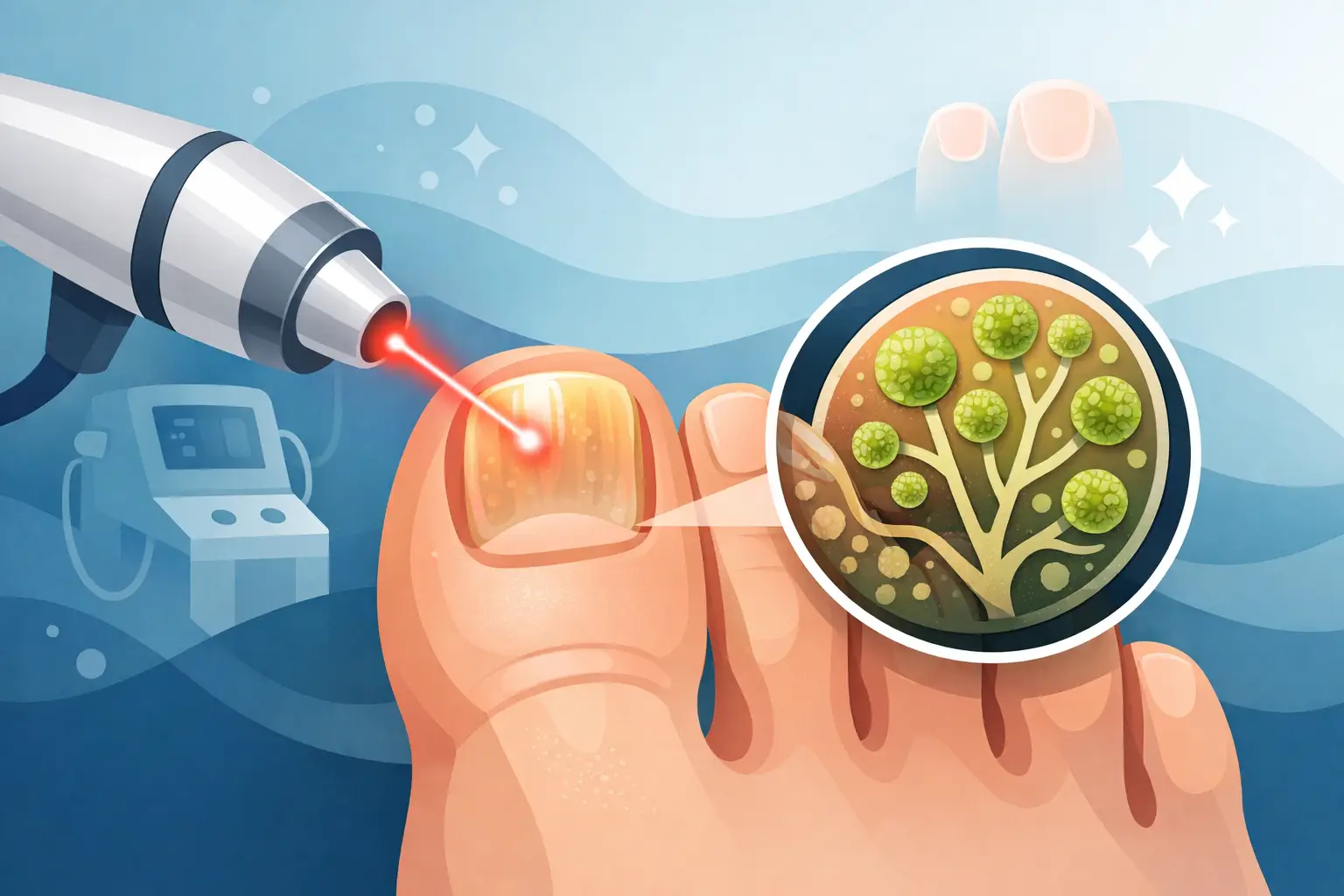
Laser treatment for toenail fungus uses focused light energy directed through the nail plate to target fungal organisms. The goal is to damage or weaken the fungus while leaving the surrounding skin and nail tissue as unharmed as possible. In a podiatry setting, the treatment is performed in the office and usually does not require needles or a recovery period that keeps you off your feet.
Most patients describe the sensation as warmth, heat, or brief snapping feelings as the laser passes over the nail. The exact experience depends on the device being used, how many nails are involved, and how thick the infected nails have become. If the nail is very thick, trimming or thinning it first may help the laser energy reach the infected area more effectively.
What laser therapy does not do is create an instant clear nail that same day. The damaged portion of the nail still has to grow out. That means visible improvement depends on the body growing a healthier nail over the following months. Toenails grow slowly, so patience matters.
Why patients consider laser treatment
Many people come to this option after trying over-the-counter products for months without much change. Topical medications can help, but they often struggle to penetrate the nail deeply enough, especially when the infection is well established. Oral antifungal medication may be effective for some patients, but it is not right for everyone. Certain medical conditions, medication interactions, or concerns about side effects can make people hesitant.
That is where laser therapy can become part of a more personalized plan. It is especially attractive to patients who want a noninvasive approach, those who prefer to avoid systemic medication, or those who have not improved with simpler treatment. In a practice that emphasizes conservative care first, this fits naturally as a treatment that can be tailored to the severity of the problem.
What kind of results should you expect?
This is the part that deserves honesty. Laser treatment for toenail fungus can be helpful, but it is not magic, and results vary.
Some patients see clearer nail growth over time and are pleased with the improvement. Others may notice partial clearing but still need ongoing care, especially if the infection was severe, involved multiple nails, or had been present for a long time. Success also depends on whether the diagnosis is correct. Not every thick or discolored nail is caused by fungus. Trauma, psoriasis, circulation issues, and other nail conditions can look similar.
That is why an evaluation matters. A podiatrist can examine the nails, discuss your symptoms, and decide whether testing is needed before recommending treatment. Starting with the right diagnosis prevents wasted time and unnecessary expense.
It also helps to know that recurrence is possible with any fungal nail treatment. Fungus thrives in warm, moist environments, and reinfection can happen from shoes, locker rooms, nail tools, or untreated athlete’s foot on the skin. Good prevention is part of getting the best long-term result.
Who may be a good candidate?
Patients who may benefit from laser treatment often include those with mild to moderate fungal nail involvement, those who cannot take oral antifungal medication, and those looking for an in-office option with little downtime. It can also make sense for patients who want to combine treatments instead of relying on one method alone.
On the other hand, candidacy depends on the full picture. If the nail is severely damaged, very thick, or partly detached, treatment may need to be combined with debridement, topical medication, or other measures. If circulation is poor or the patient has diabetes, neuropathy, or a history of wounds, foot health should be assessed carefully as part of the plan. Those conditions do not automatically rule out care, but they do mean treatment should be medically guided.
For some patients, the better question is not whether laser is good or bad. It is whether laser is the best fit for their medical history, nail condition, and goals.
What happens at the appointment?
A typical visit starts with an exam of the affected nails and the surrounding skin. Your podiatrist may ask how long the problem has been present, whether there is pain, whether you have athlete’s foot, and what treatments you have already tried. If needed, the nail may be trimmed or thinned before treatment.
The laser is then applied to the involved nails in a series of passes. The appointment is usually fairly quick, though timing depends on how many nails are being treated. Most people are able to return to normal daily activity right after the visit.
Follow-up can vary. Some patients need more than one session, and many are advised to pair laser therapy with home care measures to reduce the risk of recurrence. That may include antifungal sprays or powders for shoes, treatment of athlete’s foot, keeping feet dry, and disinfecting nail clippers.
Is laser treatment safe?
When performed by a qualified medical professional, laser treatment is generally considered safe and well tolerated. Side effects are usually limited to temporary warmth, mild discomfort during treatment, or minor sensitivity afterward. Serious complications are uncommon.
Still, safe does not mean casual. Thickened, distorted nails should be evaluated properly because appearance alone can be misleading. In some cases, what looks like fungal infection may be something else entirely. Medical supervision matters, especially for patients with diabetes, poor circulation, nerve problems, or a history of slow healing.
Cost, insurance, and practical considerations
One reason patients ask a lot of questions about laser therapy is simple – they want to know whether it is worth it. That depends on your priorities.
Because fungal nails are sometimes viewed as cosmetic by insurance plans, laser treatment may not be covered even when the nail is causing embarrassment or discomfort. Costs can vary based on the number of nails treated, the technology used, and whether multiple sessions are recommended. During a consultation, it is reasonable to ask what the full treatment plan may involve and whether there are alternatives if budget is a concern.
Value is not only about price. For some patients, avoiding oral medication is the main benefit. For others, convenience and minimal downtime matter most. And for some, combining treatments offers the best chance of improvement, even if that means a slower process.
Why home care still matters after laser treatment for toenail fungus
Even the best in-office treatment can be undermined if the fungus keeps getting reintroduced. Shoes that stay damp, shared shower floors, sweaty socks, and untreated skin fungus all create opportunities for recurrence.
Simple habits can make a real difference. Keep feet clean and dry, change socks regularly, use breathable footwear, rotate shoes so they can dry out, and avoid walking barefoot in public locker rooms or pool areas. If you also have peeling, itching, or cracking skin between the toes, that needs attention too. Skin fungus and nail fungus often travel together.
Patients are sometimes disappointed because the nail still looks abnormal for a while after treatment. That does not always mean the treatment failed. The old damaged nail must grow forward and be trimmed away over time. New nail growth is the real marker to watch.
When to see a podiatrist
If your toenail is thick, yellow, crumbly, painful, or separating from the nail bed, it is worth getting checked instead of guessing. The same is true if you have diabetes, neuropathy, circulation problems, or repeated infections. A nail problem that seems minor can become harder to manage when it is ignored.
At Chambers Foot & Ankle, patients are often relieved simply to get a clear answer and a realistic treatment plan. Sometimes that includes laser therapy. Sometimes another option makes more sense. The goal is not to push one treatment for everyone, but to help you move toward healthier nails and more comfortable feet with care that fits your situation.
If you have been hiding your feet, avoiding open-toed shoes, or wondering why nothing you buy at the store seems to work, this is a good time to stop guessing. A careful evaluation can tell you what you are dealing with and what your best next step looks like.