That sharp, burning feeling in the ball of your foot can turn a normal walk through the grocery store into something you start planning around. If you are looking for neuroma treatment without surgery, the good news is that many people improve with conservative care, especially when the problem is identified early and treated with the right combination of support, pressure relief, and targeted therapy.
A neuroma, often called Morton’s neuroma when it occurs between the third and fourth toes, is a thickening or irritation of a nerve in the forefoot. It commonly causes burning pain, tingling, numbness, or the strange sensation that you are stepping on a pebble or a bunched-up sock. Symptoms may come and go at first, then gradually become more frequent as the nerve stays irritated.
For many patients, the first priority is simple: stop making the nerve angry every time the foot hits the ground. That is why non-surgical care is usually the starting point. Surgery can help in certain cases, but it is not the first or only answer.
When neuroma treatment without surgery makes sense
Conservative treatment is often the best first step when symptoms are mild to moderate, when pain is linked to certain shoes or activities, or when the problem has not been going on for too long. It is also a reasonable approach for patients who want to avoid downtime, reduce risk, or see whether symptoms can be controlled without an operation.
That said, not every case responds the same way. A small, recently irritated neuroma may calm down with straightforward changes, while a long-standing neuroma with constant numbness and severe pain may need more advanced treatment. The key is getting an accurate diagnosis and starting treatment before compensation patterns and chronic inflammation make the problem harder to reverse.
The first goal is reducing pressure on the nerve
Most non-surgical care works by decreasing compression and irritation in the forefoot. Tight shoes, high heels, narrow toe boxes, repetitive impact, and certain foot mechanics can all squeeze the nerve. If those factors are still in place, the nerve keeps getting aggravated.
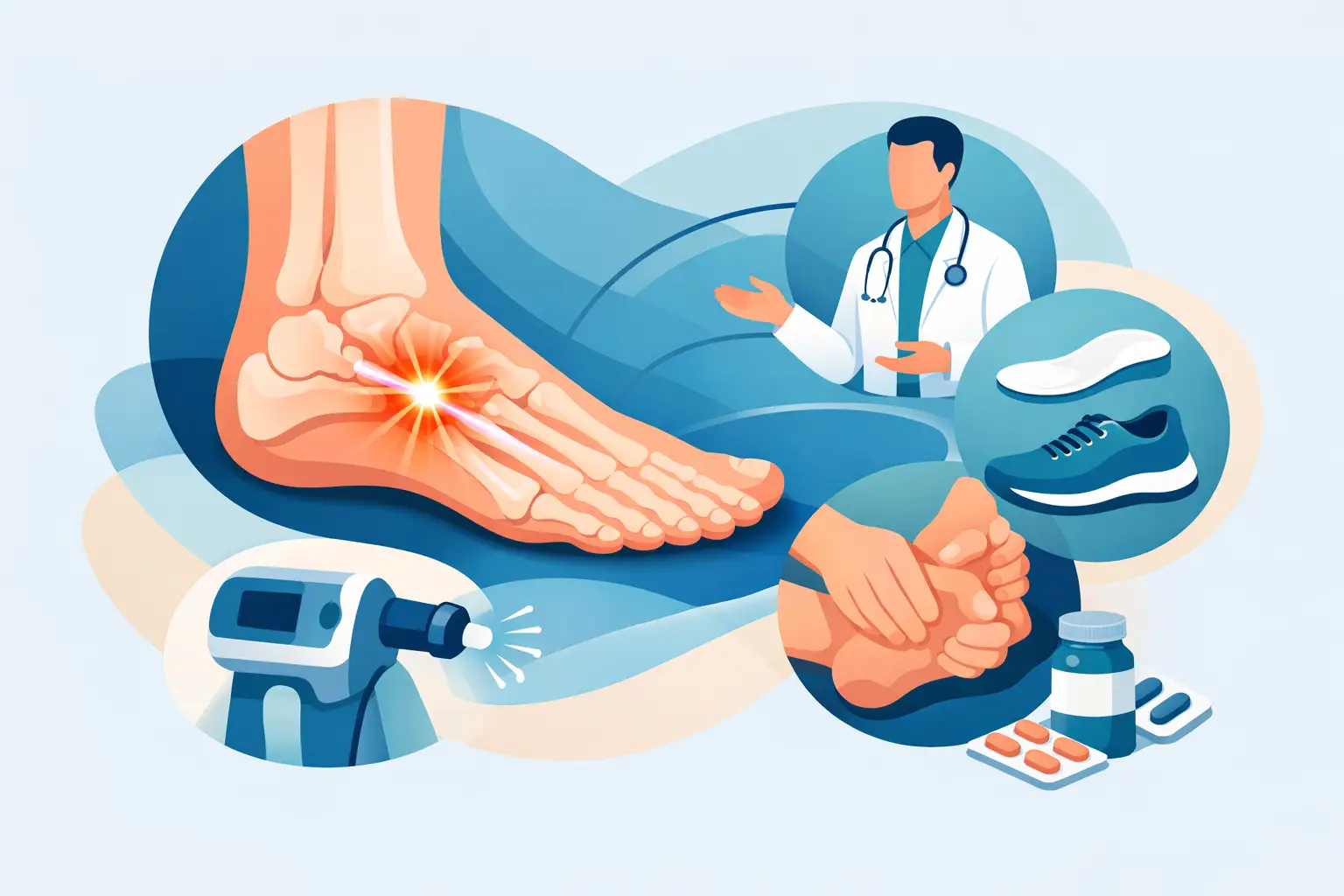
A wider, more supportive shoe is often one of the most effective first changes. Patients are sometimes surprised by how much difference this alone can make. Shoes with a roomy toe box reduce side-to-side compression, and lower heels shift less body weight onto the ball of the foot. If a shoe bends excessively in the forefoot or fits too snugly across the metatarsals, symptoms often flare.
Padding can help as well. A metatarsal pad is not placed directly on the painful spot, but just behind it to redistribute pressure and open up space around the irritated nerve. When fitted correctly, it can reduce the feeling of walking on a marble and make daily activity more tolerable.
Activity changes can calm symptoms before they become constant
If your pain worsens with long walks, court sports, running, or standing for hours, reducing repetitive forefoot loading may give the nerve time to settle down. This does not always mean stopping all activity. In many cases, it means shifting temporarily to lower-impact exercise, shortening distances, or avoiding shoes that trigger symptoms during workouts.
This is one of those areas where balance matters. Resting too little may keep the nerve inflamed, but avoiding all movement for too long can lead to stiffness, weakness, and frustration. A guided treatment plan helps patients stay active while protecting the irritated area.
Orthotics and biomechanical support
Sometimes the nerve is not just being squeezed by footwear. Foot structure and gait mechanics can also contribute. If the forefoot is overloaded with every step, or if the metatarsal bones are moving in a way that pinches the nerve, custom orthotics or supportive inserts may be recommended.
Orthotics are not one-size-fits-all. The right device depends on your arch type, walking pattern, activity level, and the exact location of pain. For one patient, the goal may be better pressure distribution. For another, it may be improved control of motion through the forefoot. When chosen carefully, orthotics can reduce repeated irritation and support longer-term relief.
Medication and injection-based relief
Anti-inflammatory medication may help in some cases, especially when symptoms have recently flared. This can reduce surrounding inflammation, but it does not correct the mechanical cause by itself. That is why medication is usually part of a broader plan rather than the whole solution.
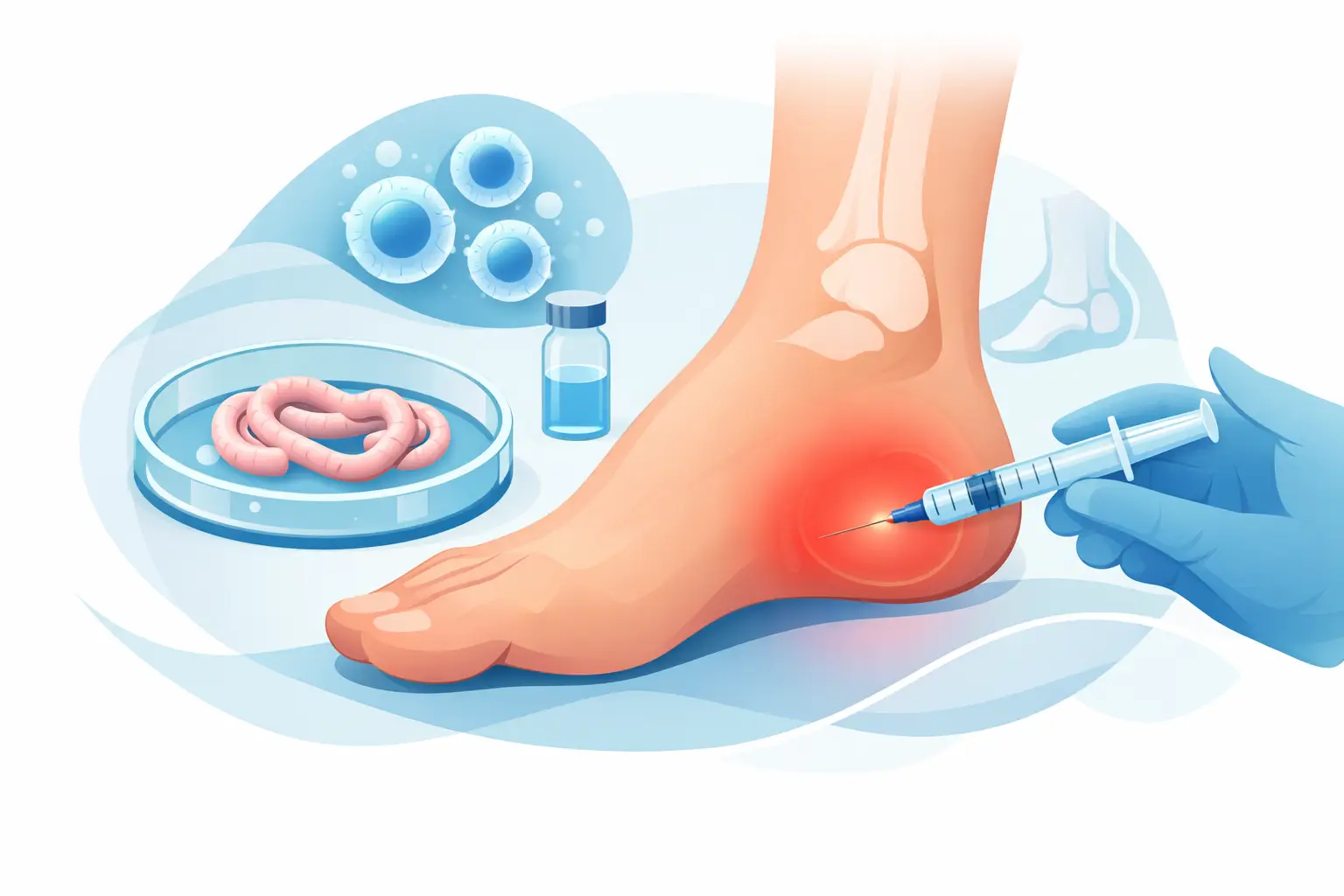
Corticosteroid injections are another common option for neuroma treatment without surgery. These injections aim to reduce inflammation around the nerve and can provide meaningful relief for some patients. They are not ideal for everyone, and the timing, number, and location matter. Some people experience significant improvement, while others get only temporary relief. It depends on how irritated the nerve is, how long symptoms have been present, and whether pressure on the area is also being corrected.
In some practices, advanced regenerative approaches may also be considered depending on the patient’s condition, medical history, and treatment goals. This can be especially appealing to patients who want a conservative plan that supports healing while trying to avoid surgery.
Physical therapy and targeted treatment
Physical therapy can be helpful when neuroma symptoms are tied to gait changes, foot weakness, calf tightness, or overuse patterns. A skilled treatment plan may include manual techniques, stretching, strengthening, and strategies to reduce abnormal loading through the forefoot.
This is not about trying to stretch the neuroma away. It is about improving the surrounding mechanics so the nerve is not constantly being compressed. When the foot and ankle move better as a system, symptoms often become more manageable.
Some patients also benefit from pain-relief technologies used as part of a broader conservative plan. At Chambers Foot & Ankle, treatment decisions are based on the individual patient, with a conservative-first approach that looks for lasting relief rather than rushing toward a procedure.
What if symptoms keep returning?
Recurring symptoms usually mean the nerve is still being irritated, even if pain improved for a while. That may happen if supportive shoes are worn only occasionally, if the pad placement is off, if activity ramps up too fast, or if the diagnosis needs a closer look.
Neuroma pain can overlap with other forefoot problems, including capsulitis, stress injuries, arthritis, or nerve-related issues coming from elsewhere. If treatment is not working, it does not always mean surgery is next. Sometimes it means the original diagnosis needs to be confirmed, or the treatment plan needs to be more specific.
Imaging and a hands-on exam can help clarify what is happening. A careful evaluation matters because treatment that helps one source of ball-of-foot pain may do very little for another.
Signs it is time to see a foot specialist
If you have forefoot burning, numbness, tingling, or the sense of a lump under the toes that keeps coming back, it is worth getting checked. The same is true if shoe changes have not helped, if you are changing how you walk to avoid pain, or if symptoms are beginning to limit work, exercise, or daily errands.
Waiting too long can make treatment harder. Patients often adapt by walking differently, reducing activity, or pushing through the discomfort until the pain becomes part of their routine. The earlier the nerve irritation is addressed, the better the chance of improving symptoms without needing more invasive care.
Is surgery ever necessary?
Sometimes, yes. If symptoms are severe, long-standing, or resistant to well-planned conservative treatment, surgical treatment may be discussed. But it should be a decision made after a full evaluation, not a default starting point.
The encouraging part is that many people do not need to begin there. Neuroma treatment without surgery can be very effective when it is matched to the underlying cause and started before the condition becomes more entrenched. The best plan is rarely just one thing. It is usually a combination of pressure relief, better mechanics, symptom control, and follow-up to make sure progress holds.
If your foot keeps reminding you with every step that something is wrong, that is worth listening to. The right treatment should do more than mask pain for a few days. It should help you move with more comfort, more confidence, and less hesitation about the next step.