
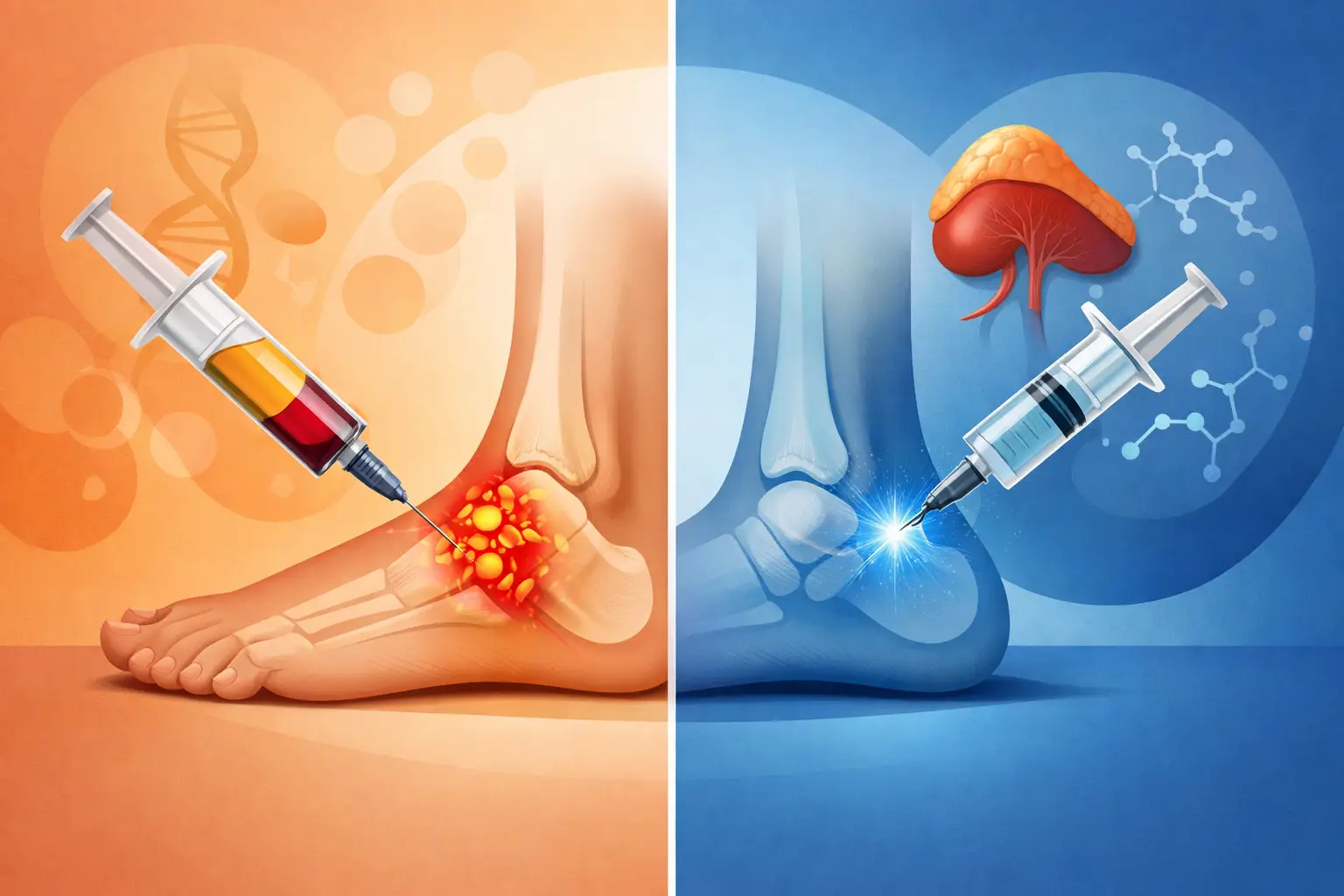
A painful first step in the morning, a stubborn ache after a walk, or swelling that keeps you from your usual activities can make you want relief quickly. When patients search for PRP vs cortisone foot treatment, they are often deciding between two very different approaches: one intended to calm inflammation and one intended to support the body’s healing response.
Neither injection is automatically the right answer. The best choice depends on the source of your pain, the health of the injured tissue, your activity goals, prior treatments, and medical history. A careful foot and ankle evaluation is the starting point, because heel pain, tendon pain, arthritis, a nerve problem, and a stress injury can feel surprisingly similar but need very different care.
PRP vs Cortisone for Foot Pain: The Key Difference
Cortisone is a corticosteroid medication. It is used to reduce inflammation and can provide relatively fast relief when inflammation is a major driver of pain. In the foot and ankle, cortisone injections may be considered for conditions such as certain cases of arthritis, bursitis, joint inflammation, or painful nerve irritation.
Platelet-rich plasma, commonly called PRP, is made from a small sample of your own blood. The blood is processed to concentrate platelets, which contain signaling proteins involved in tissue repair. PRP is intended to support healing rather than simply suppress inflammation. It is often discussed for chronic tendon problems, plantar fascia conditions, ligament injuries, and other soft-tissue concerns that have not improved with appropriate conservative treatment.
The practical difference is timing and purpose. Cortisone may reduce symptoms faster, while PRP can take longer to show results because it relies on a gradual biologic response. Cortisone is generally focused on short-term inflammatory control. PRP is typically considered when improving the quality of healing is an important goal.
When Cortisone May Be a Reasonable Option
A cortisone injection can be helpful when pain is limiting everyday function and the examination suggests inflammation is the main issue. For example, a painful arthritic joint in the foot or ankle may respond well to an injection that reduces inflammation enough for a patient to walk more comfortably, participate in physical therapy, or return to supportive footwear and activity modifications.
It can also be useful when a patient needs a short-term reduction in symptoms for a specific reason, such as an upcoming trip or an important period of work. That said, quick relief should not be confused with a cure. If an underlying mechanical problem, tendon weakness, poor footwear support, or repetitive strain remains unaddressed, symptoms may return.
Cortisone needs to be used thoughtfully in the foot. Repeated injections in certain areas may weaken tissue or increase the risk of problems such as fat-pad thinning, skin color changes, or, in some situations, tendon or plantar fascia rupture. The exact risk depends on the diagnosis, location, medication used, and number of injections. This is why an injection should follow a clear diagnosis rather than be treated as a routine solution for every painful heel or ankle.
People with diabetes may also need extra planning. Steroid injections can temporarily raise blood sugar levels, so patients should discuss glucose management and other health conditions with their medical provider.
When PRP May Be Worth Considering
PRP may be an option when pain has become chronic and the affected tissue has not recovered with measures such as rest, supportive shoes, orthotics, stretching, physical therapy, or activity changes. It is commonly considered for persistent plantar fasciitis, tendinopathy involving the Achilles tendon or posterior tibial tendon, and some ligament or soft-tissue injuries.
For a patient with long-standing heel pain, the distinction matters. If the plantar fascia is chronically thickened and irritated rather than simply acutely inflamed, an approach focused only on suppressing inflammation may not match what the tissue needs. PRP may be recommended in selected cases to encourage a more productive healing response.
PRP is not an instant fix. Some patients have soreness after the injection, and improvement often occurs over weeks to months rather than days. Your provider may recommend a temporary reduction in impact activity, a walking boot in certain cases, stretching or rehabilitation at the appropriate time, and a gradual return to exercise. Following the recovery plan is part of getting the best possible result.
Because PRP uses a patient’s own blood, the risk of an allergic medication reaction is low. Still, it is an injection, so temporary pain, bruising, swelling, infection, and lack of improvement remain possible. Results vary, and PRP is not appropriate for every condition or every patient.
How a Foot Specialist Chooses Between PRP and Cortisone
The decision should begin with a diagnosis, not a preference for one injection over another. A podiatric exam may include checking your gait, range of motion, areas of tenderness, nerve symptoms, circulation, footwear, and the way your foot functions under load. X-rays, ultrasound, or other imaging may be helpful when a stress fracture, tendon tear, arthritis, or another structural issue is suspected.
Your provider will also consider how long symptoms have lasted. A sudden flare of joint inflammation is different from a tendon problem that has been building for a year. The location matters, too. A cortisone injection may be appropriate inside an inflamed joint but may be less desirable around tissue that is already weakened or at risk of rupture.
Your goals deserve a place in the conversation. Someone hoping to comfortably walk through the workday may have different priorities than a runner preparing to return to training. A personalized plan may include an injection, but it can also include bracing, custom orthotics, shoe recommendations, physical therapy, regenerative treatments, or other conservative options.
What About Plantar Fasciitis?
Plantar fasciitis is one of the most common reasons people compare PRP and cortisone. It often causes sharp pain at the bottom of the heel with the first steps after rest, followed by aching with prolonged standing or walking. Many cases improve with conservative care, including calf stretching, plantar fascia stretching, supportive shoes, orthotics, and activity adjustments.
When those measures have not provided enough relief, cortisone may ease pain in carefully selected cases. However, providers are typically cautious about repeated steroid injections in the plantar fascia because of the potential for tissue weakening and rupture. PRP may be considered for chronic plantar fasciitis when the goal is to support tissue recovery and avoid repeated steroid exposure.
There is no universal injection timeline for plantar fasciitis. The right plan depends on symptom duration, imaging findings when needed, your daily demands, and how you have responded to treatment so far.
Questions to Ask Before an Injection
Before choosing PRP or cortisone, ask what diagnosis is being treated and what the injection is expected to accomplish. It is also helpful to ask how quickly relief may occur, what activity restrictions are needed, whether medication changes are necessary, and what the next step will be if symptoms do not improve.
You should tell your provider about diabetes, blood-thinning medications, immune conditions, active infections, pregnancy, allergies, and prior injections or surgery. These details can affect treatment safety and timing.
At Chambers Foot & Ankle, the focus is on understanding why your foot hurts before recommending a treatment plan. An injection can be valuable, but it works best as part of care designed around your condition, mobility needs, and long-term comfort.
Pain that persists should not force you to give up walks, exercise, work, or time with family. A thoughtful evaluation can help you choose a treatment that aims not only to reduce pain today, but also to help you move with greater confidence tomorrow.