
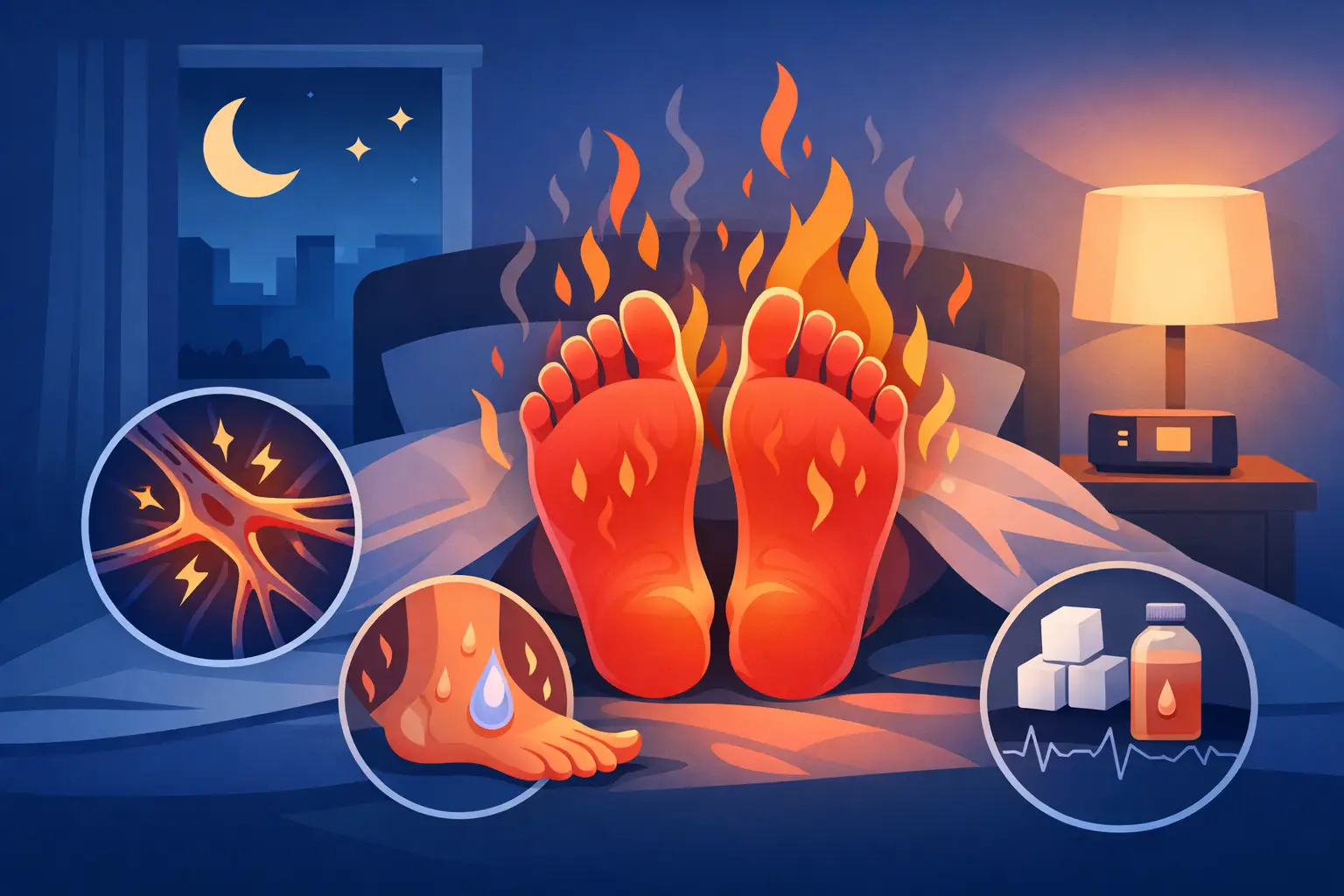
Burning feet can make it hard to fall asleep, stay asleep, and feel rested enough for the next day. If you are wondering what causes burning feet at night, the answer can range from temporary irritation after a long day on your feet to an underlying nerve, skin, circulation, or metabolic condition that deserves medical attention.
The timing can be confusing. Your feet may feel mostly manageable during the day, then become hot, prickly, painful, or unusually sensitive once you lie down. Nighttime symptoms are common with nerve-related conditions because there are fewer distractions, bedding can trap heat, and changes in position may make sensations more noticeable. The good news is that identifying the cause is the first step toward meaningful relief.
What Causes Burning Feet at Night?
Burning is a symptom, not a diagnosis. A careful foot and ankle evaluation can help determine whether the sensation begins in the skin, muscles, blood vessels, or nerves. These are some of the more common reasons it occurs.
1. Peripheral neuropathy
Peripheral neuropathy means damage or dysfunction involving the nerves outside the brain and spinal cord. It often causes burning, tingling, numbness, pins-and-needles sensations, or pain that is worse at night. Some people describe feeling as though they are wearing socks when they are barefoot, while others feel sharp sensitivity to bed sheets touching their toes.
Diabetes is one of the leading causes of peripheral neuropathy. However, neuropathy may also be associated with vitamin deficiencies, thyroid disorders, kidney disease, alcohol use, certain medications, chemotherapy, and other medical conditions. In some cases, a cause is not immediately clear, which is one reason a thorough evaluation matters.
2. Diabetes and changes in blood sugar
When blood sugar remains elevated over time, it can affect nerves and reduce the body’s ability to heal. Burning, numbness, and tingling in both feet are common early warning signs of diabetic nerve changes. Symptoms may begin gradually and become more persistent if blood sugar is difficult to manage.
For people with diabetes, burning feet should never be ignored. Reduced sensation can make it easier to miss a blister, cut, pressure area, or developing wound. Regular diabetic foot care helps protect the skin, monitor circulation and sensation, and address small concerns before they become serious complications.
3. Nerve compression or irritation
A pinched or irritated nerve can cause burning in a specific area of the foot, ankle, or lower leg. Tarsal tunnel syndrome, for example, occurs when the tibial nerve is compressed near the inside of the ankle. Symptoms may include burning, tingling, numbness, or shooting pain that travels into the heel, arch, or toes.
Nerve irritation can also come from a back condition, a prior injury, swelling around the ankle, or footwear that places pressure on the foot. Unlike generalized neuropathy, nerve compression may affect one foot more than the other or follow a more defined pattern.
4. Overuse, heat, and footwear pressure
Long work shifts, walking on hard surfaces, intense exercise, and shoes with limited cushioning can leave feet aching and hot by evening. Tight shoes, narrow toe boxes, and non-breathable socks may trap heat and create pressure that aggravates already-sensitive tissues or nerves.
This does not mean every case of burning feet is simply a shoe problem. Still, footwear can make an existing issue worse. A supportive shoe with adequate room through the toes and a comfortable, moisture-managing sock can reduce irritation for many people. If symptoms continue despite changing shoes and activity habits, it is worth looking deeper.
5. Athlete’s foot or skin irritation
Fungal infections such as athlete’s foot can cause burning, itching, peeling, cracking, redness, or scaling, especially between the toes and along the soles. Feet may feel worse at night if they have been warm and sweaty in shoes throughout the day.
Other skin conditions, including eczema, allergic reactions, or contact dermatitis from a new soap, foot product, shoe material, or laundry product, can also create a burning sensation. Visible skin changes can offer helpful clues, but not every fungal infection looks the same. Persistent rashes or cracked skin should be evaluated, particularly for patients with diabetes or circulation concerns.
6. Circulation problems
Healthy circulation supplies the feet with oxygen and nutrients needed for comfort and healing. Arterial circulation problems can contribute to foot pain, cramping, slow-healing wounds, color changes, or cold feet. Venous issues can lead to swelling, heaviness, and discomfort that worsens after standing.
Burning alone does not automatically mean poor circulation, and many people with burning feet have nerve-related symptoms instead. Still, circulation should be assessed when pain is accompanied by pale, bluish, or unusually red skin; swelling; non-healing sores; changes in temperature; or pain that occurs with walking or rest.
7. Vitamin deficiencies and medical conditions
Low levels of certain nutrients, particularly vitamin B12, can affect nerve health and contribute to burning or tingling in the feet. Thyroid disease, kidney problems, autoimmune conditions, and some infections may also play a role.
This is why home remedies can have limits. Cooling your feet may provide short-term comfort, but it will not correct a vitamin deficiency, manage diabetes, or relieve a compressed nerve. When symptoms are recurrent or worsening, the right treatment depends on the reason behind them.
8. Less common causes, including erythromelalgia
Erythromelalgia is a less common condition that can cause episodes of intense burning pain, warmth, and redness in the feet. Heat, exercise, standing, or wearing warm socks may trigger symptoms. Because this condition can resemble other problems, a medical assessment is needed to distinguish it from neuropathy, infection, inflammatory conditions, or circulation concerns.
When Burning Feet Need Prompt Care
A new burning sensation is not always an emergency, but certain symptoms should be addressed quickly. Seek prompt medical attention if burning foot pain occurs with a wound, spreading redness, warmth, drainage, fever, severe swelling, sudden weakness, or a change in foot color.
Patients with diabetes should contact a foot specialist promptly for any blister, cut, crack, sore, or area of redness, even if it does not seem painful. Numbness can hide the severity of an injury. Sudden one-sided swelling, calf pain, chest pain, or shortness of breath requires urgent medical care.
Steps You Can Take Tonight
Simple changes may ease mild symptoms while you arrange an evaluation. Choose breathable socks, avoid tight shoes, and keep blankets from pressing heavily on sensitive toes. A cool, not ice-cold, foot rinse or compress can be soothing for some people. Avoid placing ice directly on the skin, especially if you have diabetes, numbness, or reduced circulation, because an injury may go unnoticed.
Take a close look at your feet in good lighting. Check the soles, heels, sides, and spaces between the toes for cracks, blisters, swelling, peeling skin, redness, or drainage. If you have diabetes, make this a daily habit. Avoid using medicated creams, antifungal products, or pain relievers as a long-term solution without knowing what you are treating.
Keeping a brief symptom record can also be useful. Note whether both feet are involved, what time symptoms begin, whether activity or certain shoes make them worse, and whether there is numbness, swelling, skin change, or back pain. These details can help your provider narrow down the likely cause.
How a Podiatrist Can Help Find Relief
A podiatric evaluation may include a review of your health history, medications, activity level, footwear, skin condition, circulation, and nerve sensation. Depending on your symptoms, your provider may recommend coordination with your primary care physician for blood work or additional testing. The goal is not simply to quiet the burning temporarily. It is to address the condition contributing to it and protect your long-term foot health.
Treatment may involve diabetic foot management, changes in footwear or orthotics, treatment for fungal or inflammatory skin conditions, activity modifications, medication coordination, physical therapy, or conservative care for nerve irritation. The right plan depends on your diagnosis, your health history, and how much symptoms are affecting sleep and daily mobility.
At Chambers Foot & Ankle, care begins with listening closely to what your feet are telling you. Burning feet at night may be a sign that your body needs more than another pair of socks or a quick home remedy. Getting answers can help you sleep more comfortably, move with greater confidence, and return to the activities you enjoy.