A drugstore insert can feel like a small miracle when your feet ache after a long day. For some people, it is exactly the right first step. For others, the relief fades quickly because the support does not match the way their feet move. When considering custom orthotics vs inserts, the better choice depends on your symptoms, activity level, foot structure, shoes, and the condition causing your pain.
At Chambers Foot & Ankle, we take a conservative, personalized approach to helping patients move better and feel better. That often begins with understanding whether an over-the-counter insert is enough or whether a custom orthotic may provide more meaningful, lasting support.
Custom orthotics vs inserts: the main difference
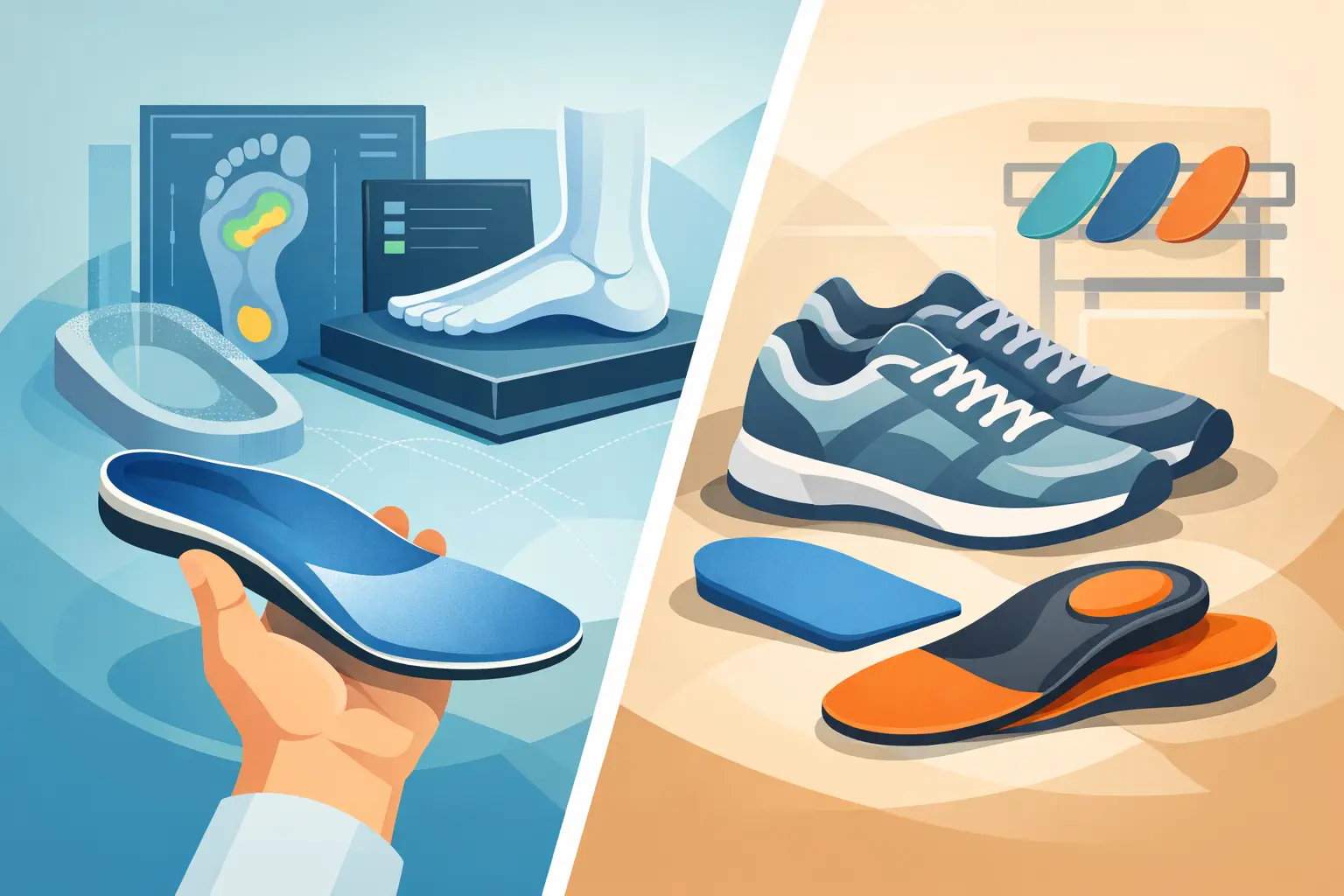
Inserts are pre-made shoe supports sold in pharmacies, athletic stores, and online. They may provide extra cushioning, arch support, heel padding, or pressure relief. Because they are available in standard sizes and shapes, they are easy to try and usually cost less than a custom device.
Custom orthotics are prescription medical devices made for your individual feet. A podiatrist evaluates how you stand and walk, identifies areas of excess pressure or instability, and takes an impression or digital scan. The orthotic is then designed to address a specific mechanical need, such as controlling abnormal motion, supporting a fallen arch, redistributing pressure, or accommodating a painful deformity.
Neither option is automatically best. A well-chosen insert can help with mild, occasional discomfort. A custom orthotic may be more appropriate when pain is persistent, a condition is affecting the way you walk, or a standard insert repeatedly fails to provide relief.
When an over-the-counter insert may help
Quality inserts can be useful for people whose feet are generally healthy but tired from work, travel, exercise, or standing for long hours. They can also be a practical way to test whether added cushioning or arch support changes your symptoms.
For example, a runner with mild soreness after increasing mileage may benefit from a supportive athletic insert while adjusting training volume and footwear. Someone who works on concrete floors may feel better with a cushioned insert that reduces impact under the heel and forefoot. In these situations, an insert can be an affordable, convenient part of a broader plan that may include stretching, supportive shoes, activity changes, or physical therapy.
The key is choosing an insert that fits both your foot and your shoe. A bulky insert in a narrow shoe can crowd the toes, cause rubbing, or alter your gait. A very soft insert may feel comfortable at first but compress too quickly to offer meaningful support. People with high arches often need cushioning and pressure distribution, while those with flat feet may need firmer structure. The label alone cannot always tell you which one is right.
When custom orthotics are worth considering
Custom orthotics are often recommended when there is a clear medical or biomechanical reason for more precise support. They are not simply upgraded insoles. Their purpose is to change how forces move through the foot and ankle during standing, walking, work, or sports.
They may be helpful for ongoing plantar fasciitis, recurrent heel pain, posterior tibial tendon problems, arthritis, painful flat feet, high-arched feet, bunions, metatarsalgia, certain tendon conditions, and some sports-related overuse injuries. They can also be particularly valuable for people with diabetes, neuropathy, calluses, foot deformities, or a history of ulcers, where reducing pressure in the wrong area can help protect the skin.
A custom device may also make sense if one leg functions differently from the other, if an old injury has changed your gait, or if you have tried several inserts without success. In those cases, the issue may not be a lack of padding. It may be how your foot rolls, how your ankle aligns, or where your body places stress with every step.
Precision matters for chronic pain and high-risk feet
Chronic foot pain can lead people to compensate without realizing it. You may shift weight to the outside of the foot, shorten your stride, avoid stairs, or stop exercising because each step feels unreliable. Over time, that compensation can contribute to discomfort in the ankle, knee, hip, or back.
A podiatric exam looks beyond the location of pain. Your provider may assess joint motion, muscle strength, footwear wear patterns, skin changes, circulation, sensation, and the way you walk. For patients with diabetes or reduced sensation, this evaluation is especially important. A seemingly minor pressure point can become a blister, callus, or wound if it is not addressed early.
Fit, materials, and the break-in period
Custom orthotics can be firm, semi-rigid, or softer and more accommodative. The material is selected based on your diagnosis and goals. An active person with unstable flat feet may need a different design than an older adult with arthritis and a tender forefoot. A device intended for work boots may also differ from one made for running shoes or dress shoes.
Because custom orthotics influence foot mechanics, they may require a brief adjustment period. Mild awareness of the device can be normal at first, but worsening pain, numbness, rubbing, or new blisters are not signs to ignore. Contact your podiatry office if the device feels wrong. Adjustments are sometimes needed to improve comfort and function.
Inserts can require attention, too. Replace them when they are compressed, cracked, or no longer supportive. Even a good insert cannot compensate for shoes that are worn out, too narrow, unstable, or poorly sized.
Cost is part of the decision, but so is value
Over-the-counter inserts are less expensive upfront, which makes them a reasonable choice for many people with mild symptoms. Custom orthotics cost more because they include a clinical evaluation, individualized design, fabrication, and follow-up when needed. Insurance coverage varies by plan and by the medical reason for the device.
The most cost-effective option is not always the least expensive one at the register. Replacing multiple inserts, continuing to miss workouts, or treating pain that keeps returning can add up. On the other hand, custom orthotics are not necessary for every sore foot. A thoughtful evaluation helps avoid spending money on support you do not need.
What orthotics and inserts cannot do alone
Supportive devices can be very helpful, but they are usually one piece of treatment rather than the entire answer. Plantar fasciitis may improve with stretching, activity modification, and appropriate shoes. An ankle injury may require bracing, rehabilitation, or imaging. A painful neuroma, worsening arthritis, tendon tear, infection, or nonhealing wound needs targeted medical care.
Do not rely on an insert to push through pain that is severe, sudden, or getting worse. Prompt evaluation is important if you have redness, warmth, swelling, drainage, numbness, an open sore, color changes in the toes, or pain after an injury that makes it difficult to bear weight. People with diabetes should have new foot problems checked early, even when discomfort seems minor.
How to make the right choice
Start with the problem you are trying to solve. If your discomfort is mild and occasional, a supportive over-the-counter insert paired with well-fitting footwear may be a sensible first move. Give it a fair trial, but pay attention to whether your pain, balance, and activity tolerance actually improve.
If symptoms have lasted several weeks, return whenever you become more active, affect both your daily life and your gait, or involve a known foot condition, a podiatric evaluation can provide clearer direction. Bring the shoes you wear most often and any inserts you have tried. Those details can reveal a great deal about the stresses your feet experience each day.
Your feet carry you through work, family responsibilities, exercise, and the moments you enjoy most. The right support should help you stay active with less pain, not become another thing you have to work around.