
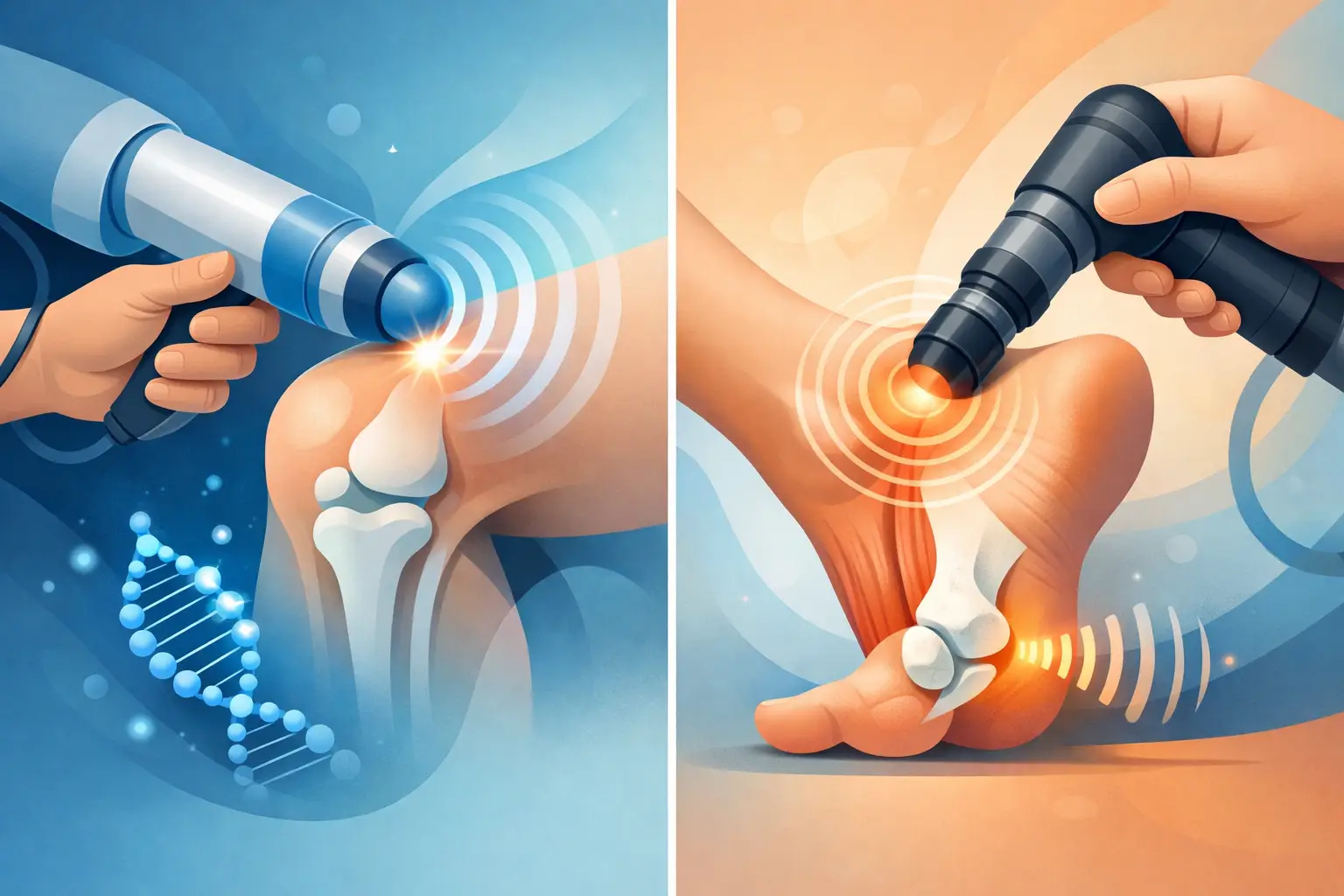
If you are dealing with stubborn heel pain, Achilles discomfort, or a nagging foot or ankle injury that just will not calm down, you may have come across the question of StemWave vs shockwave therapy. The wording can be confusing because these treatments are related, and in some settings the names are used as if they mean exactly the same thing. For patients, what matters most is simpler: how the treatment works, what it is meant to help, and whether it is a good fit for your specific condition.
StemWave vs shockwave therapy: are they different?
The short answer is yes and no. Shockwave therapy is the broader category. StemWave is a branded form of extracorporeal shockwave therapy, which means it uses acoustic waves delivered from outside the body to stimulate healing in injured tissue. So when patients ask about StemWave vs shockwave therapy, they are often comparing a specific branded technology with the general treatment type.
That distinction matters because not every shockwave device is the same. Different systems can vary in energy delivery, treatment depth, and how focused the treatment is. Even so, the goal is similar: encourage your body to repair tissue that has stayed irritated, inflamed, or slow to heal.
For many foot and ankle problems, this can be appealing because it is non-surgical, does not rely on a long recovery, and may help people who have not gotten enough relief from rest, stretching, orthotics, anti-inflammatory strategies, or physical therapy.
How these treatments work in the body
Both StemWave and other forms of shockwave therapy use sound-based pressure waves. These waves are directed into the area of pain or tissue damage. The treatment creates controlled mechanical stimulation, which may help increase circulation, trigger a healing response, and improve cellular activity in tissue that has become chronically injured.
In plain terms, the body sometimes needs a push. Conditions like plantar fasciitis, Achilles tendinitis, and certain chronic soft tissue injuries can linger because the tissue is stuck in an unhealthy cycle. Shockwave-based treatment aims to interrupt that cycle and restart healing.
This is one reason these therapies are usually discussed for chronic problems rather than fresh injuries. If you rolled your ankle yesterday, this may not be the first step. If you have had heel pain for months and conservative care has only helped a little, it may be worth discussing.
When StemWave or shockwave therapy may help
In foot and ankle care, these therapies are often considered for conditions involving tendons, fascia, and other soft tissues that have become painful over time. Plantar fasciitis is one of the most common examples, especially when morning heel pain keeps returning. Achilles tendinitis or tendinosis can also be a strong candidate, particularly when activity continues to trigger soreness and stiffness.
Some patients with chronic ankle pain, tendon irritation, or overuse injuries may benefit as well. It depends on the diagnosis, the location of the pain, and whether there are other issues involved, such as nerve irritation, joint arthritis, instability, or a stress injury that needs a different approach.
That is where a proper evaluation matters. A treatment can be advanced and still be the wrong fit if the diagnosis is off.
The real differences patients should care about
From a patient perspective, the biggest difference in StemWave vs shockwave therapy is not usually the marketing language. It is the treatment plan built around the technology.
First, there is device design. Some shockwave systems are radial, meaning the energy disperses more broadly and tends to treat more superficial tissue. Others are focused, which can target tissue at different depths with more precision. Branded systems like StemWave may have their own protocols and delivery style. That can influence comfort, treatment depth, and what conditions are most appropriate.
Second, there is provider judgment. The same technology can produce very different results depending on who is using it, what diagnosis they are treating, and whether the rest of the care plan supports healing. If your pain is being driven by poor biomechanics, worn-out shoes, calf tightness, nerve entrapment, or an unrecognized tear, treatment should address those factors too.
Third, there is patient selection. Not everyone with foot pain needs regenerative treatment. Some people improve with a more basic, conservative plan. Others need imaging, immobilization, custom orthotics, injection therapy, or a discussion about surgery if the problem is advanced. The best care is not about pushing one treatment. It is about matching the treatment to the problem.
What treatment feels like
Most patients want to know one thing right away: does it hurt?
Shockwave-based treatments are generally tolerable, but they are not always completely comfortable. You may feel rapid tapping or pulsing over the painful area. Sensitive tissue can feel sore during treatment, especially when the condition has been active for a long time. The session itself is usually brief, and many patients return to normal daily activity afterward with little or no downtime.
You also should not expect instant results after one visit. These treatments work by stimulating healing, so improvement often happens gradually over a series of sessions. Some people notice changes early. Others improve over several weeks as the tissue response develops.
What results can you expect?
This is where honest expectations matter. StemWave and other shockwave therapies can be very helpful, but they are not magic.
For the right condition, many patients experience reduced pain and better function. That might mean less heel pain when getting out of bed, easier walking, or less discomfort after activity. But results depend on several things, including how long you have had the problem, the severity of tissue damage, your activity level, and whether you follow the rest of the treatment plan.
If you continue overloading an injured tendon, skip supportive footwear, or return too quickly to high-impact exercise, progress can stall. On the other hand, when treatment is paired with smart rehab and a clear diagnosis, it can be a useful part of a conservative care plan.
Who may not be a good candidate?
There are times when shockwave-based treatment is not the best option. If your pain is coming from a fracture, severe arthritis, major tendon tearing, infection, or a condition that needs more urgent intervention, this may not be the right starting point. Certain medical factors may also affect candidacy.
That is why a thoughtful exam matters more than the device name. A patient-centered practice will explain not only when a treatment can help, but also when it may not.
Why the diagnosis matters more than the label
It is easy to get caught up in the wording of StemWave vs shockwave therapy, especially online. But in the exam room, the more useful question is often this: what is causing your pain, and what treatment gives you the best chance to heal without unnecessary procedures?
For some patients, a shockwave-based approach makes a lot of sense because it supports healing while allowing them to stay relatively active. For others, simpler care may work just as well. And for a smaller group, the issue may be advanced enough that more aggressive treatment needs to be discussed.
At Chambers Foot & Ankle, that kind of decision is best made after looking at the whole picture – your symptoms, your activity level, your medical history, your imaging if needed, and your goals. A runner trying to get back on the road may need a different plan than a person with diabetes and chronic heel pain, even if both are interested in regenerative options.
How to decide what makes sense for you
If you are considering this type of treatment, ask a few practical questions. What is the exact diagnosis? Is the goal to reduce pain, stimulate healing, or avoid a more invasive step? What kind of response timeline is realistic? And what else should be done alongside treatment to improve the odds of success?
Those questions usually lead to a better decision than focusing only on brand names. The technology matters, but the plan matters more.
If your foot or ankle pain has lingered longer than it should, it may be time to look beyond temporary relief and ask what will actually help the tissue recover. The right treatment is the one that fits your condition, your life, and your path back to moving comfortably again.