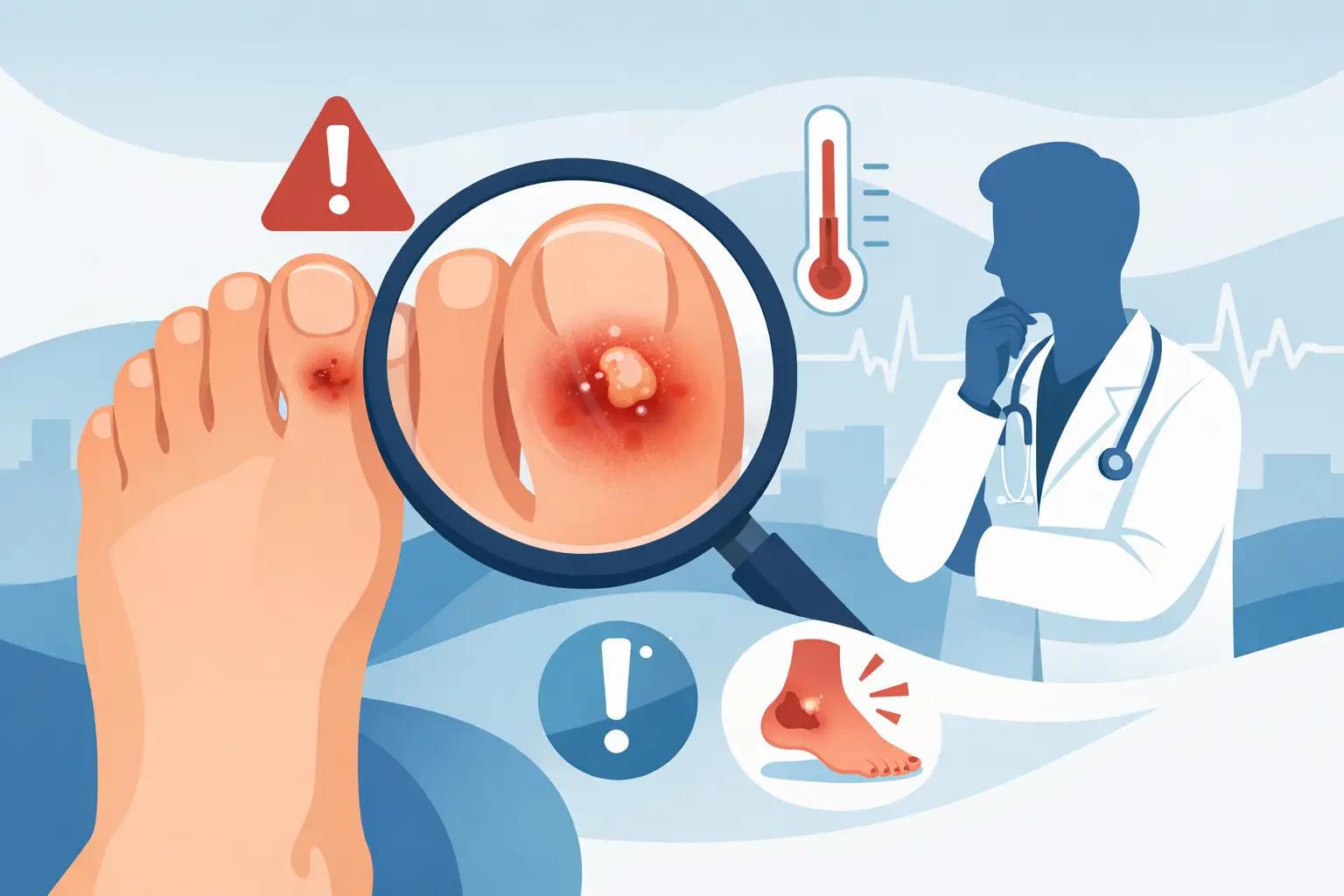

A small cut from a sandal strap, an ingrown toenail, or a cracked heel can seem minor at first. But when bacteria enter through damaged skin, a foot infection can worsen quickly – especially for people with diabetes, poor circulation, neuropathy, or a weakened immune system. Knowing the top signs of foot infection can help you seek care before a manageable concern becomes a more serious wound.
Foot infections are not always dramatically painful. In fact, reduced feeling from neuropathy can allow an infection to progress with little discomfort. Paying attention to visual changes, drainage, warmth, and changes in how your foot feels or functions is often the safest approach.
Top Signs of Foot Infection to Watch For
Redness that spreads or deepens
Redness around a cut, blister, nail edge, or sore is often one of the earliest signs of inflammation or infection. A small amount of pinkness after a minor injury may improve as the area heals. Redness that expands, becomes darker, forms streaks, or remains unchanged for several days deserves professional attention.
On darker skin tones, redness may be less obvious. Look instead for an area that appears darker than the surrounding skin, feels warmer, or looks swollen and shiny. Comparing both feet can make a subtle color change easier to notice.
Increasing warmth, swelling, or tenderness
An infected area may feel noticeably warmer than the rest of the foot. Swelling around a toe, the ball of the foot, the ankle, or a wound can also indicate that the body is responding to infection. Some swelling can occur after an injury, but swelling that increases rather than improves should not be ignored.
Pain is another useful signal, particularly when it is new, throbbing, or out of proportion to the size of the injury. However, pain alone does not tell the whole story. People with diabetes or nerve damage may have a significant infection with little or no pain.
Drainage, pus, or a new odor
Clear fluid from a fresh blister can be part of normal healing. Thick yellow, green, white, or cloudy drainage is more concerning, particularly if it continues or increases. Blood mixed with drainage, a wet spot in a sock, or crusting that returns after cleaning can also point to a problem beneath the surface.
A foul or unusual odor is another reason to schedule an evaluation. Odor can occur when bacteria are present in a wound or when dead tissue has developed. Do not try to mask the smell with creams, powders, or heavily scented products. The cause needs to be assessed.
A sore that is not healing
A healthy minor wound should gradually look and feel better. If a cut, ulcer, blister, or nail-area sore is not showing clear improvement within a few days, it is worth having it checked. A wound that becomes larger, deeper, darker, or wetter needs more urgent care.
This is especially true for diabetic foot wounds. High blood sugar, reduced blood flow, and loss of sensation can slow healing and increase the risk of deeper infection. Even a wound that does not hurt can require prompt treatment to protect the foot.
Skin color changes or dark tissue
Purple, gray, black, or unusually pale skin around a wound can signal a circulation problem, tissue damage, or a serious infection. A dark spot should never be assumed to be a simple bruise when there is also swelling, drainage, a sore, or a history of diabetes.
Changes in skin color can be difficult to interpret at home, but that is exactly why early evaluation matters. A podiatrist can examine the skin, circulation, wound depth, and underlying structures to determine what is happening and what treatment is needed.
Fever, chills, or feeling unwell
A foot infection can sometimes affect more than the foot. Fever, chills, nausea, fatigue, confusion, or a general feeling of illness may mean an infection is becoming more widespread. These symptoms require urgent medical attention, particularly when they occur with a red, swollen, draining, or painful foot wound.
Do not wait for an office appointment if you have fever with rapidly spreading redness, red streaks traveling up the foot or leg, severe swelling, confusion, or trouble breathing. Seek emergency medical care right away.
When an Ingrown Nail Becomes Infected
Ingrown toenails are a common source of toe infections. The skin along the nail border may become red, swollen, tender, and warm. As the nail continues to press into the skin, drainage or pus may develop. Tight shoes and attempts to dig out the nail corner at home can make the irritation worse.
Early treatment can often be conservative, depending on the severity of the problem. Once infection is present, however, proper nail and wound care is safer than repeated home trimming. Patients with diabetes, poor circulation, or neuropathy should avoid attempting bathroom procedures on an ingrown nail and contact a foot specialist promptly.
Why Diabetes and Neuropathy Change the Picture
Diabetes does not guarantee a foot infection, but it raises the stakes when a wound occurs. Neuropathy can reduce the ability to feel pressure, heat, rubbing, or injury. Poor circulation may limit the oxygen and nutrients needed for healing. Together, these concerns can allow a small issue to progress without the usual warning signs.
For that reason, people with diabetes should inspect both feet every day, including between the toes and the bottoms of the feet. Use a mirror or ask a family member for help if bending is difficult. Look for cuts, blisters, cracks, calluses, redness, drainage, or changes in color and temperature.
It is also wise to avoid walking barefoot, even at home. A splinter, puncture wound, or unnoticed injury can create an opening for infection. Well-fitting shoes and clean, dry socks are simple daily protections that support foot health.
What to Do if You Notice Possible Infection
If you notice possible signs of infection, gently wash the area with mild soap and clean water, then pat it dry. Cover an open wound with a clean, dry dressing. Avoid soaking the foot, using harsh chemicals such as hydrogen peroxide, or applying strong medicated products unless a clinician has advised you to do so. These steps can irritate tissue and delay healing in some situations.
Do not pop blisters, cut away calluses, or attempt to drain a swollen area yourself. It can be tempting to solve the problem quickly, especially when it involves a nail or a visible pocket of fluid. But opening the skin without sterile technique can introduce more bacteria and make the wound harder to manage.
Keep pressure off the affected area as much as possible. Choose roomy footwear, avoid long walks or exercise that rubs the area, and change dressings if they become wet or dirty. Then arrange an evaluation based on the severity of your symptoms.
When to Call a Podiatrist and When to Seek Emergency Care
Call a podiatrist promptly for redness, warmth, swelling, drainage, odor, a wound that is not healing, or an infected-looking ingrown toenail. Same-day or next-day care is particularly appropriate for patients with diabetes, neuropathy, circulation concerns, or a prior history of foot ulcers.
Emergency care is the right choice if redness is spreading quickly, pain is severe, the skin is turning dark, you have fever or chills, or you feel sick overall. A deep puncture wound, an animal bite, or a foot wound with uncontrolled bleeding also needs urgent attention.
At Chambers Foot & Ankle, care begins with understanding the cause of the problem, not simply covering the symptom. Depending on your needs, treatment may include wound care, removal of pressure from the area, treatment for an infected nail, medication when appropriate, and ongoing monitoring to support safe healing and preserve mobility.
Your feet carry you through work, family life, exercise, and the everyday routines that matter. If something looks different, feels warmer, drains, or simply is not healing as it should, trusting that concern and seeking care early can make a meaningful difference.